
How to Write a Pet Approval Letter to Your Landlord (2026 Guide With Templates)
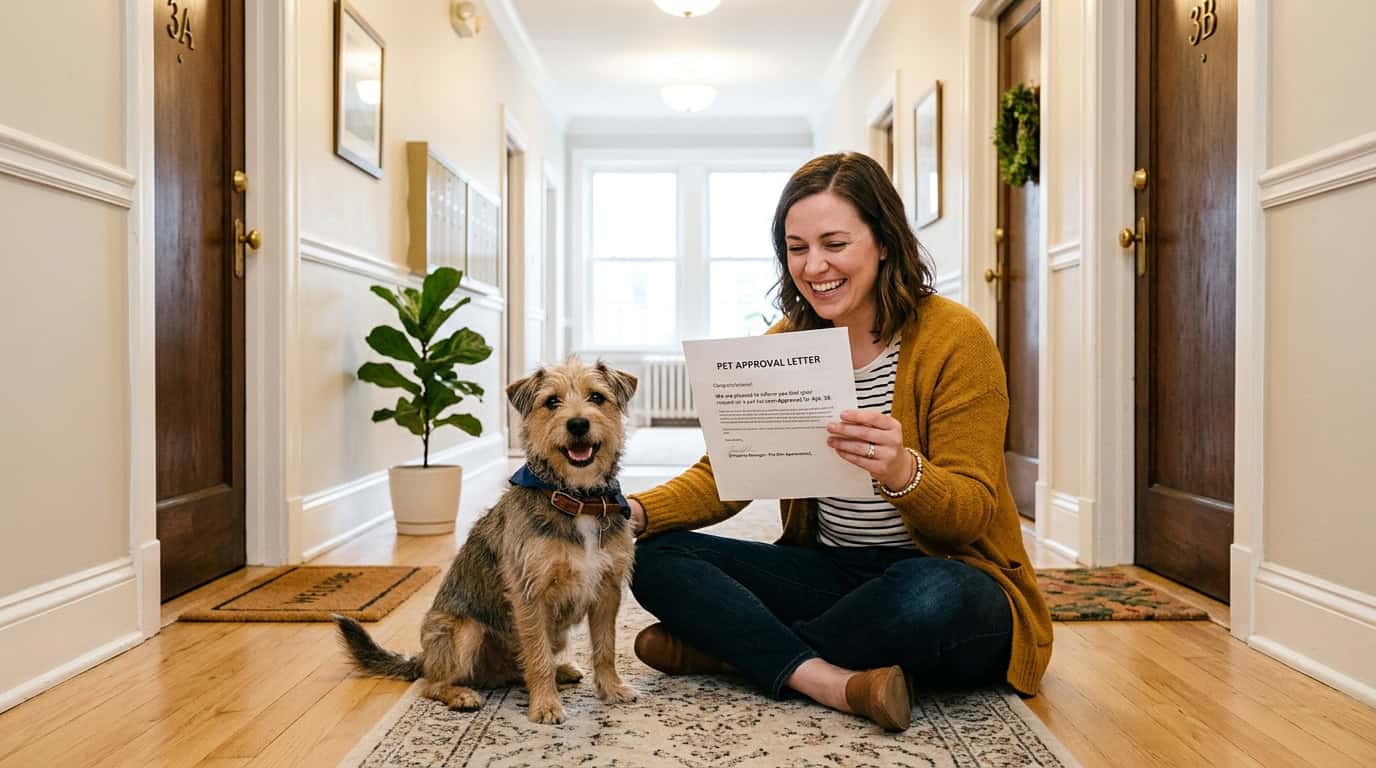
A pet approval letter to your landlord is a formal written request that introduces your pet, documents their health and behavior credentials, and offers specific assurances (additional deposit, professional cleaning, vet references) that reduce the landlord’s risk. A well-structured letter with a pet resume attached converts more pet approvals than any verbal conversation — even in buildings with soft no-pet policies.
The phrase “no pets allowed” stops most renters cold. But for anyone who’s dealt with enough landlords, here’s the truth: most no-pet policies aren’t brick walls — they’re opening positions.
Landlords list “no pets” because they’re worried about damage, noise complaints, and liability. A well-written pet approval letter addresses every single one of those worries before the landlord can voice them. The result, more often than people expect, is a yes.
This guide covers what your letter needs to include, three templates you can use right now, and the strategic moves that separate renters who get approved from those who give up. Pair this letter with our pet resume guide and our apartment pet inspection checklist to build the complete landlord-proof package.
Why Written Requests Work Better Than Verbal Ones?
Most tenants ask about pets verbally — casually, often at the worst time. A landlord who hears “by the way, is it okay if I get a dog?” during a lease signing has no time to think it through, no information to evaluate, and every reason to default to no.
A written letter changes the dynamic entirely:
- It signals that you’re a serious, organized tenant
- It gives the landlord something to review at their own pace
- It creates a paper trail that protects both parties
- It allows you to include documentation (vaccinations, training certs) that a verbal request can’t convey
- It establishes professionalism before the conversation begins
The Humane Society has long advocated for written pet permission requests as the most effective strategy for renters in restrictive buildings. The HUD rental assistance resources also note that written communication protects tenants in the event of later disputes about verbal agreements.
What to Include in Every Pet Approval Letter?
State your name, unit number, and the length of your tenancy (if applicable). Reference your rental track record if positive. Keep it professional — this is a business letter, not a plea.
Name, breed, age, weight, and spay/neuter status. Be specific. A landlord who reads “6-year-old 18-pound neutered male Beagle mix” has a concrete picture. A landlord who reads “small dog” has nothing but concern.
Note vaccination status, veterinarian contact, and any training credentials. Reference our complete guide on what landlords look for in pet owners for the specific signals that matter most.
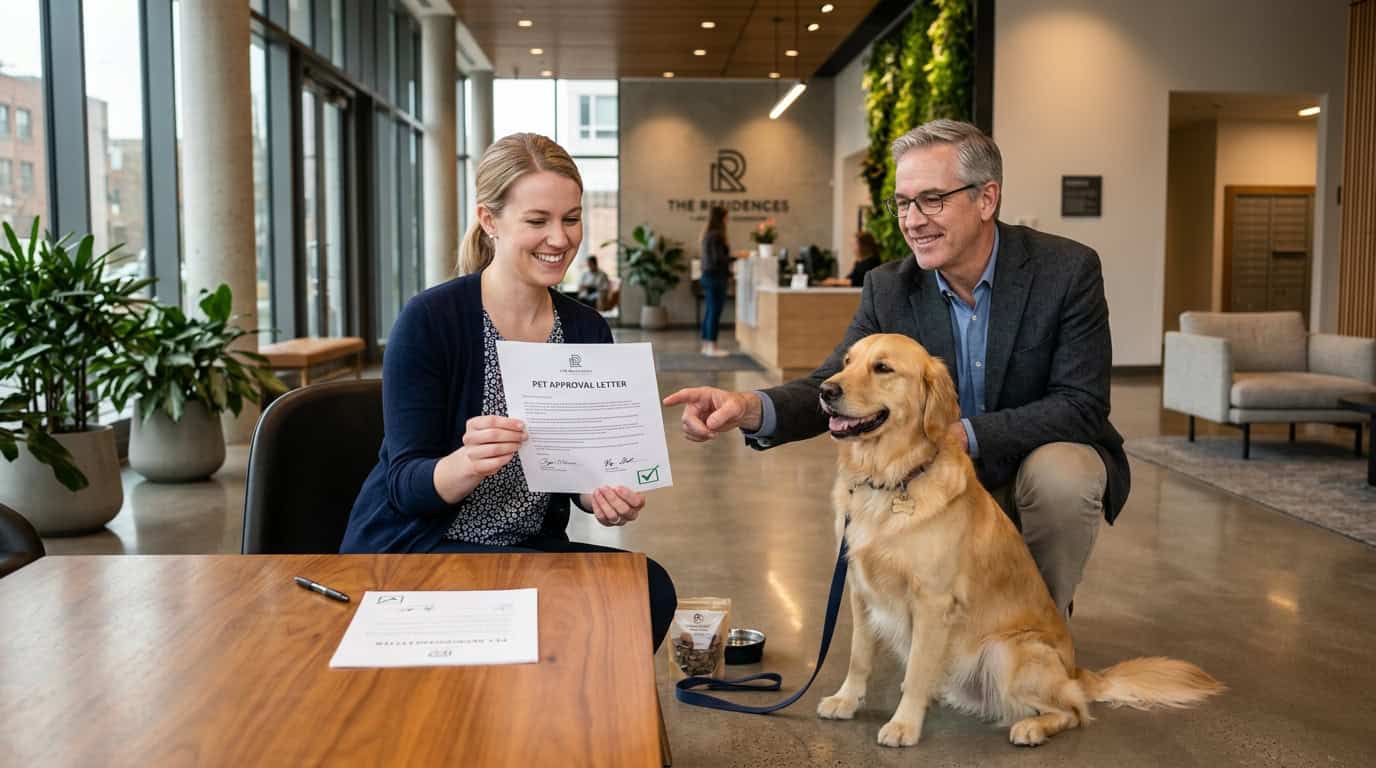
Include specific, actionable commitments: an additional pet deposit amount, professional carpet cleaning at move-out (with a receipt), a pet meet-and-greet invitation, or a trial period offer. Specificity closes deals that vague good intentions can’t.
Express appreciation, invite questions, and provide clear contact information. End with a specific next-step ask — not just “let me know” but “I’m available to meet this week at your convenience.”

What Should You Know About Template 1?
[Landlord or Property Manager Name]
[Property Address]
Dear [Landlord Name],
I am writing to respectfully request permission to keep my pet in
the unit at [Address, Unit #], which I am applying to rent.
I understand the property’s current no-pet policy, and I want to
address any concerns you may have directly.
My pet is [Pet Name], a [age]-year-old [breed], weighing [X] lbs.
[He/She] is spayed/neutered, fully vaccinated, and has lived
comfortably in apartment settings throughout [his/her] life.
[Pet Name] is trained in basic obedience [and holds a Canine Good
Citizen certificate from the AKC, if applicable]. My veterinarian
is [Dr. Name] at [Clinic Name] — [phone number] — and I’m happy
to provide vaccination records and a behavioral reference.
To address any concerns about property condition, I am prepared to:
• Pay an additional pet deposit of $[amount]
• Provide a professional carpet cleaning receipt at move-out
• Schedule a meet-and-greet at your convenience
I have also prepared a full pet resume, which I’ve attached for
your review.
Thank you for considering my request. I’d welcome the chance to
speak with you — please feel free to reach me at [phone] or
[email].
Sincerely,
[Your Name]
What Should You Know About Template 2?
[Landlord Name]
[Property Address]
Dear [Landlord Name],
I have been a tenant at [Unit Address] since [move-in date] and
have genuinely enjoyed living here. I’m writing to request
permission to add a pet to my household.
I recently adopted/plan to adopt [Pet Name], a [age]-year-old
[breed] weighing [X] lbs. [He/She] is [spayed/neutered],
current on all vaccinations, and [house/litter]-trained.
Over the past [X months/years], I have maintained the unit in
excellent condition and [paid rent on time without exception/had
no complaints from neighbors]. I want to continue that record
with your full knowledge and approval.
To ensure the unit remains in the same condition, I offer to:
• Pay an additional pet deposit of $[amount]
• Schedule quarterly self-inspections and share results with you
• Provide professional cleaning documentation at move-out
I have attached [Pet Name]’s full pet resume, including vet
contact and references from my previous landlord at [address].
Thank you for your time and consideration. I’m available to
discuss this at any time — and happy to bring [Pet Name] in for
a meet-and-greet.
Sincerely,
[Your Name]
[Unit Number] | [Phone] | [Email]
What Should You Know About Template 3?
[Landlord or Property Manager Name]
[Property Address]
Dear [Landlord Name],
I am writing to formally request a reasonable accommodation
under the Fair Housing Act for my assistance animal.
I am a person with a disability as defined under the FHA, and
my [dog/cat/other], [Pet Name], provides [emotional support /
trained assistance] that is necessary for me to have an equal
opportunity to use and enjoy my home.
I have enclosed documentation from my treating [physician/
therapist/psychiatrist] confirming my disability-related need
for [Pet Name].
[Pet Name] is a [breed], [age] years old, weighing [X] lbs,
and is fully vaccinated. [He/She] does not pose a direct threat
to others and has no history of aggressive behavior.
Please respond to this request in writing within [10 business
days], as required under HUD guidance. I am happy to provide
any additional documentation you may need.
Sincerely,
[Your Name]
[Unit Number] | [Phone] | [Email]
What Are Strategic Moves That Dramatically Improve Your Odds?
1. Attach a pet resume. A letter alone is good. A letter + a professional pet resume is outstanding. Our full pet resume guide has everything you need.
2. Offer the first month’s verification. Propose a 30-day trial period with a written check-in. This reduces perceived risk and shows you’re confident your pet will behave.
3. Name a specific deposit amount. Don’t make the landlord figure out what’s fair. An unprompted offer of $200–$400 signals you’ve thought this through and that you can afford it. Review our guide on pet deposits and pet rent fees to know what’s typical in your market.
4. Include neighbor references if possible. If neighbors in the building have met your pet, a quick note from them transforms “your word” into “community corroboration.”
5. Send by email AND deliver a printed copy. Email creates a timestamped record. A printed copy signals seriousness and stays on the landlord’s desk rather than disappearing into an inbox.
How Do You Handle Common Landlord Objections?
“Our insurance doesn’t cover pets.” Ask if you can provide your own renter’s insurance with pet liability coverage. Many policies include this for under $20/month. An online guide to pet-inclusive renter’s insurance can walk you through options.
“Previous tenants’ pets caused damage.” This is the most common underlying concern. Offer a higher deposit and reference your pet’s track record specifically. Ask whether a trial period with documented monthly check-ins would address their concern.
“Other tenants might complain.” Offer to introduce your pet to nearby neighbors before move-in. A cooperative tone here often shifts landlords significantly.
“The lease doesn’t allow it.” Acknowledge this directly: “I understand the current lease terms, and I’m asking for a written amendment or addendum that we can both sign. I want this to be fully above-board.” This framing respects the landlord’s process rather than trying to sidestep it.
For more on lease amendments, see our breakdown of what a pet addendum contains and red flags to watch for before signing one.
What to Do After You Send the Letter?
- Follow up in 5 business days if you haven’t heard back. Keep the follow-up brief: “I wanted to make sure my request came through — I’m happy to answer any questions or schedule a meet-and-greet.”
- Be available. Don’t go dark after sending. A quick response to landlord questions keeps momentum.
- Prepare your documentation. Have your pet’s vaccination records, vet contact, and pet resume ready to send the moment you’re asked.
- Once approved, do a full inspection. Use our apartment pet inspection checklist at move-in to document baseline condition and protect your deposit long-term.
The ASPCA consistently notes that most pet-related housing disputes are preventable through upfront communication and documentation — which is exactly what this letter process establishes. Equip yourself with the right pet documentation organizer to keep all your records in order throughout your tenancy.
And once you’ve secured your approval, protecting your deposit starts immediately — use our 12-point apartment pet inspection checklist from day one and review the full overview at renting with pets to stay ahead of every potential issue. The CDC’s Healthy Pets resource is also worth bookmarking for ongoing health and documentation guidance.
Frequently Asked Questions
What should a pet approval letter to a landlord include?
A pet approval letter should include your name and unit number, your pet’s name, breed, age, weight, and spay/neuter status, a brief behavioral description, your offer to pay an additional deposit or cover professional cleaning at move-out, and an invitation for the landlord to meet your pet. Keep it professional, concise, and solution-focused.
Can I add a pet to my apartment lease mid-tenancy?
Yes, in most cases you can request to add a pet mid-tenancy by writing formally to your landlord. Your long track record as a responsible tenant is a major advantage. Many landlords are more flexible with existing tenants they trust than with unknown applicants.
How do I ask my landlord for a pet when the building has a no-pet policy?
Write a formal request letter that acknowledges the no-pet policy, explains why your specific pet represents minimal risk, offers financial assurances (additional deposit, professional cleaning), and provides documentation like vaccination records and vet contact. Attach a pet resume. Request a meet-and-greet. Many no-pet policies are soft policies that individual landlords can override.
Should I send my pet approval letter by email or mail?
Email is preferred — it creates a timestamped record and is easy for landlords to forward for consideration. Send it as a PDF attachment with a brief, professional covering email. For large management companies, follow up with a hard copy if no response is received within 5 business days.
What if my landlord says no to my pet request?
Ask politely if there are conditions under which they would reconsider — additional deposit, proof of training, a trial period. If still declined, ask whether the policy is final or under review. You can also consult local tenant rights resources, as some jurisdictions limit a landlord’s ability to categorically refuse all pets without a legitimate reason.
Found this useful? Share it with a fellow pet renter 🐾
.bpp-layout-fix{max-width:780px;margin:0 auto;padding:0 1rem;font-family:-apple-system,BlinkMacSystemFont,”Segoe UI”,Roboto,sans-serif;color:#1a202c;line-height:1.7}
.bpp-layout-fix h1{font-size:2rem;font-weight:800;line-height:1.25;margin-bottom:.5rem}
.bpp-layout-fix h2{font-size:1.45rem;font-weight:700;margin-top:2rem;margin-bottom:.75rem;color:#1a202c}
.bpp-layout-fix h3{font-size:1.15rem;font-weight:600;margin-top:1.5rem;margin-bottom:.5rem;color:#2d3748}
.bpp-layout-fix p{margin-bottom:1rem}
.bpp-layout-fix ul,.bpp-layout-fix ol{margin:0 0 1rem 1.5rem;padding:0}
.bpp-layout-fix li{margin-bottom:.4rem}
.bpp-layout-fix a{color:#36b37e;text-decoration:underline}
.bpp-layout-fix img{max-width:100%;height:auto;border-radius:10px;display:block;margin:1.25rem auto}
.bpp-breadcrumb{font-size:.82rem;color:#718096;margin-bottom:.75rem}
.bpp-breadcrumb a{color:#718096}
.bpp-meta{font-size:.82rem;color:#a0aec0;margin-bottom:1.25rem;display:flex;gap:1rem;flex-wrap:wrap;align-items:center}
.bpp-quick-answer{background:#f0fff4;border-left:4px solid #36b37e;border-radius:8px;padding:1rem 1.25rem;margin:1.5rem 0}
.bpp-quick-answer strong{display:block;margin-bottom:.35rem;color:#276749;font-size:.85rem;text-transform:uppercase;letter-spacing:.05em}
.bpp-disclosure{font-size:.78rem;color:#a0aec0;background:#f7fafc;border-radius:6px;padding:.6rem 1rem;margin:1rem 0 1.5rem}
.bpp-template-box{background:#f7fafc;border:1px dashed #cbd5e0;border-radius:8px;padding:1rem 1.25rem;font-family:monospace;font-size:.87rem;line-height:1.75;white-space:pre-wrap;overflow-x:auto;margin:1.25rem 0}
.bpp-section-card{background:#fff;border:1px solid #e2e8f0;border-radius:10px;padding:1rem 1.25rem;margin-bottom:1rem}
.bpp-section-label{font-size:.78rem;font-weight:700;text-transform:uppercase;letter-spacing:.08em;color:#36b37e;margin-bottom:.35rem}
.bpp-tip-box{background:#fffbea;border-left:4px solid #f6ad55;border-radius:8px;padding:.9rem 1.1rem;margin:1.25rem 0;font-size:.93rem}
.bpp-tip-box strong{color:#c05621}
.bpp-warning-box{background:#fff5f5;border-left:4px solid #fc8181;border-radius:8px;padding:.9rem 1.1rem;margin:1.25rem 0;font-size:.93rem}
.bpp-warning-box strong{color:#c53030}
.bpp-faq{margin-top:2rem}
.bpp-faq-item{border:1px solid #e2e8f0;border-radius:8px;margin-bottom:.75rem;padding:1rem 1.25rem}
.bpp-faq-item h3{margin:0 0 .4rem;font-size:1rem;color:#2d3748}
.bpp-faq-item p{margin:0;font-size:.93rem}
.bpp-author{display:flex;gap:1rem;align-items:flex-start;background:#f7fafc;border-radius:10px;padding:1.1rem 1.25rem;margin-top:2rem}
.bpp-author img{width:56px;height:56px;border-radius:50%;object-fit:cover;flex-shrink:0}
.bpp-author-info{font-size:.88rem;color:#4a5568}
.bpp-author-info strong{display:block;font-size:.95rem;color:#1a202c;margin-bottom:.2rem}
.bpp-share{margin-top:1.5rem;text-align:center}
.bpp-share p{font-size:.9rem;color:#718096;margin-bottom:.5rem}
.bpp-share a{display:inline-block;margin:.25rem;padding:.45rem 1rem;border-radius:8px;color:#fff;font-size:.85rem;font-weight:600;text-decoration:none}
.bpp-share .share-tw{background:#1da1f2}
.bpp-share .share-fb{background:#1877f2}
.bpp-share .share-pin{background:#e60023}
.bpp-newsletter-cta{background:linear-gradient(135deg,#f0fff4,#e6fffa);border:1px solid #9ae6b4;border-radius:12px;padding:1.5rem;margin:2rem 0}