
7 Ways to Legally Protect Yourself When Renting With Pets in 2026
Frequently Asked Questions
What should I include in the pet addendum when renting?
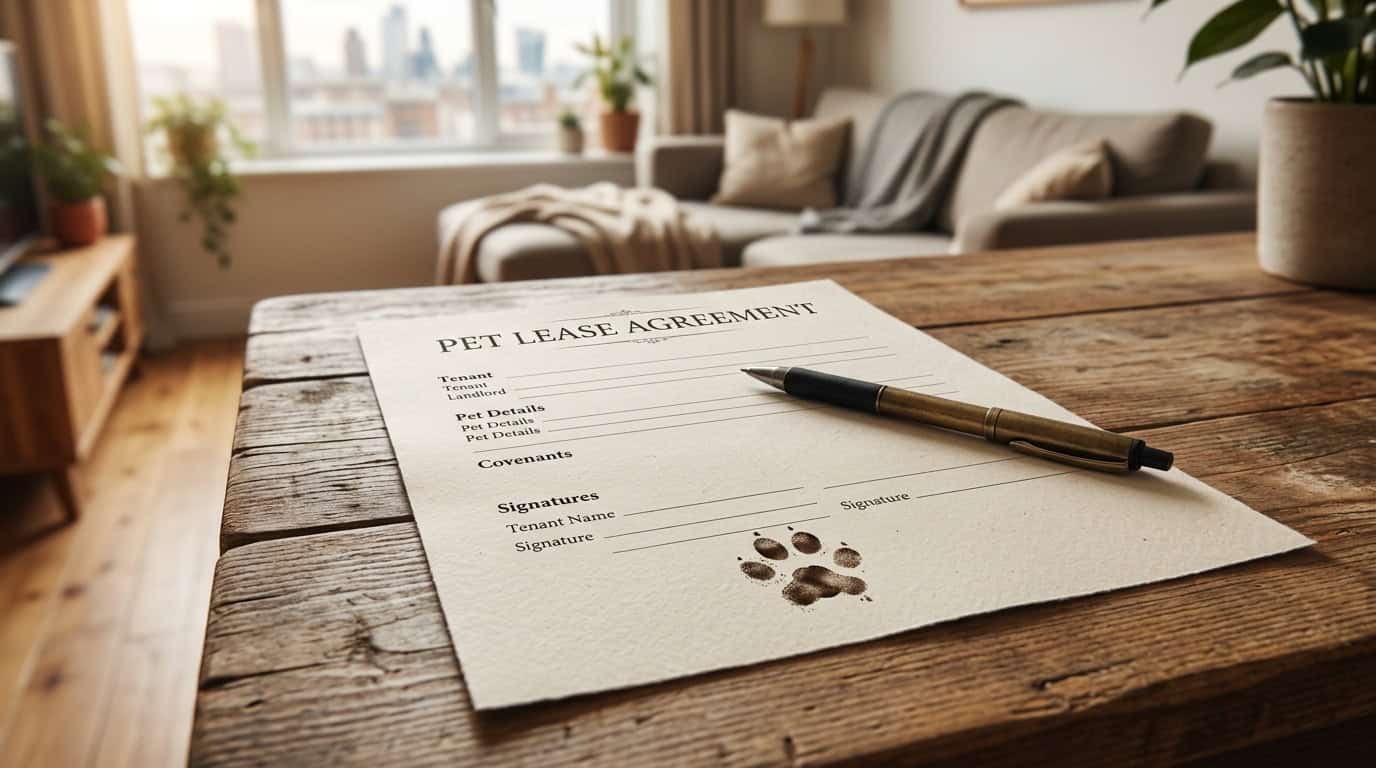
Your pet addendum should include your pet’s name, breed, age, weight, number of approved pets, all fees and deposits, specific rules, and both parties’ signatures.
How can I protect my security deposit when moving in with pets?
Document your unit’s condition with detailed photos and videos of every room to prevent being blamed for pre-existing damage.
Are verbal agreements about pets enforceable in rental situations?
No, verbal agreements are not enforceable; always insist on written documentation to protect yourself.
What types of renter’s insurance should pet owners consider?
Pet owners should carry renter’s insurance that includes pet liability coverage to protect against potential damages caused by their pets.
How can I know my rights as a tenant with pets?
Familiarize yourself with local tenant rights and regulations regarding pet ownership to ensure you’re informed and protected.

Protect yourself legally by getting every pet-related agreement in writing, documenting your unit’s condition at move-in with photos, knowing your local tenant rights, and carrying renter’s insurance with pet liability. Never rely on verbal agreements — paper trails win disputes every time.
Finding a pet-friendly apartment is hard enough. But signing a lease and moving in without legally protecting yourself is where many pet owners get burned — losing deposits, facing unexpected fees, or even getting eviction notices they can’t fight.
The rental market in 2026 has gotten more competitive, and landlords are stricter about pets than ever. That doesn’t mean you’re powerless. With the right steps, you can protect yourself, your pet, and your security deposit before you even unpack a single box. Here are seven legally sound strategies every renting pet owner needs to know.
What About Get Everything in Writing — No Exceptions?
If your landlord verbally agreed to your dog, that agreement is worth nothing in a dispute. Written documentation is your only real protection. Before moving in, insist on a signed pet addendum or an explicit pet clause in the lease itself.
Your written agreement should specify:
- Pet’s name, breed, age, and weight — be specific. “Dog” isn’t enough; “3-year-old male Labrador Retriever, 65 lbs” is.
- Number of approved pets — if you have two cats, the document should say “two cats,” not just “pets.”
- All fees and deposits — non-refundable pet fee amounts, refundable deposit amounts, and monthly pet rent (if any).
- Specific rules — leash requirements, common area access, designated relief areas, noise expectations.
- Both parties’ signatures and date — unsigned agreements are unenforceable.
Keep a signed copy in a safe place — cloud storage, email yourself a scan, or both. This single document is your first line of legal defense.
Also check our guide on must-ask questions for your landlord about pets before you sign anything — knowing the right questions prevents the worst surprises.
What About Document Your Unit’s Condition Before Moving In?
Pet owners are disproportionately blamed for pre-existing damage at move-out. Protect your deposit by creating an ironclad photographic record of the unit’s condition on day one.
How to Do a Move-In Inspection Right
- Photo and video every room — floors, walls, baseboards, window sills, door frames, and appliances. Zoom in on every scratch, stain, or scuff no matter how small.
- Timestamp everything — most phones do this automatically; if not, photograph a newspaper or dated note in frame.
- Complete the move-in checklist — if the landlord provides one, fill it out thoroughly. If not, create your own detailed list.
- Email it to your landlord within 48 hours — this creates a timestamped paper trail proving you disclosed the unit’s condition. Send via email with read receipt or certified mail.
This documentation has saved tenants thousands of dollars in wrongfully withheld deposits. It’s free insurance — don’t skip it.
What About Know Your Tenant Rights by State and City?
Tenant protections vary dramatically by location. What’s perfectly legal for a landlord in one state could be illegal in another. Before you sign anything, research the specific laws that apply to your rental.
Key areas to research:
- Security deposit limits — many states cap how much landlords can charge for security deposits, including pet deposits. Some states require them to be held in separate accounts.
- Pet deposit refund rules — some states mandate that all deposits (including pet deposits) are refundable unless actual damage occurred.
- Notice requirements — rules about how much notice a landlord must give before entering, or before changing pet policies at renewal.
- Service and ESA protections — the U.S. Department of Housing and Urban Development (HUD) provides protections for service animals and emotional support animals that can override a landlord’s no-pets policy under the Fair Housing Act.
Search “[your state] landlord tenant laws” and look for your state’s official housing authority website. Tenant advocacy nonprofits often offer free resources and sometimes free legal consultations.
What About Carry Renter’s Insurance With Pet Liability Coverage?
Standard renter’s insurance doesn’t cover damage your pet causes to the unit — but pet liability coverage (available as a rider on many renter’s policies) can cover third-party injuries your pet causes. This protects you from lawsuits if your dog bites a neighbor or causes an injury in a common area.
What to look for in a policy:
- Personal liability limit of at least $100,000
- Coverage for dog bites and animal-related injuries
- Breed exclusions (some insurers exclude “high-risk” breeds — check before purchasing)
- Medical payment coverage for minor injuries without litigation
Many landlords now require proof of renter’s insurance as a lease condition — having a policy with pet liability makes you a more attractive tenant and gives you legal protection at the same time. For budget-friendly options, check our money savers guides.

What About Understand Exactly What Fees Are (and Aren’t) Refundable?
Pet-related fees come in three varieties, and many tenants don’t know the difference until it’s too late:
- Non-refundable pet fee — a one-time charge that covers general pet-related wear and tear. You don’t get this back.
- Refundable pet deposit — held against actual pet-caused damage. Must be returned (minus documented damage costs) at move-out.
- Monthly pet rent — an ongoing addition to your rent. This is neither a deposit nor a fee; it’s simply extra rent.
Before signing, ask your landlord to specify in writing which fees are refundable and which aren’t. Then cross-reference with your state’s laws on deposit refundability — some states prohibit non-refundable fees entirely.
If your landlord refuses to clarify in writing, treat that as a red flag about how the tenancy will go.
What About Build a Pet Résumé to Establish Your Track Record?
Landlords who are on the fence about allowing pets respond well to documented evidence that your pet is low-risk. A pet résumé is a one-page document that includes:
- Your pet’s name, age, breed, weight, and photo
- Vaccination records and vet contact information
- Spay/neuter status
- Training certifications or obedience class completion
- References from previous landlords confirming no pet-related issues
This isn’t just a negotiating tool — it’s a legal asset. If a landlord approves your pet based on specific representations (e.g., “my dog is trained and won’t cause damage”), the résumé documents those representations and can support your position in a deposit dispute.
For tips on presenting yourself as an ideal pet-owning tenant, read our full guide on what landlords look for in pet owners.
What About Read Every Lease Renewal for Pet Policy Changes?
Even if your current lease has a signed pet addendum, your landlord can modify or eliminate pet permissions at renewal. Many tenants sign renewal agreements without reading them carefully — and discover new pet restrictions only after they’ve committed to another year.
At every renewal:
- Compare the renewal’s pet clause against your current agreement word for word
- Look for new breed restrictions, weight limits, or additional fees that weren’t present before
- Check if your specific pets are still explicitly named and approved
- Negotiate any changes you disagree with before signing — once signed, you’re bound
If a landlord adds unfavorable pet terms at renewal, you have leverage: you’re a known tenant with a proven track record. Use it to push back or negotiate written carve-outs for your existing pets.
Bonus: Keep a Pet File
Maintain a dedicated folder — digital or physical — that contains: your signed lease and pet addendum, all move-in photos, pet fee receipts, vet records, all communications with your landlord, and any written acknowledgments about your pet. If a dispute ever arises, this file is what wins.
For more strategies on managing apartment life with animals, explore our apartment living tips and our pet health and safety guides.
What Should You Know About Recommended?
Being a responsible pet renter means being prepared. Search for top-rated renter’s insurance comparison tools, pet lease templates, and move-in documentation kits:
- Pet Lease Agreement Templates on Amazon
- Renter’s Insurance & Pet Liability Guides
- Apartment Pet Training Books